

AI for E-Commerce in 2026: Where It Actually Helps and How to Start
In short
AI for e-commerce in 2026: a practical overview of where AI genuinely helps online stores, from product discovery to operations, and how to adopt it without chasing every trend.
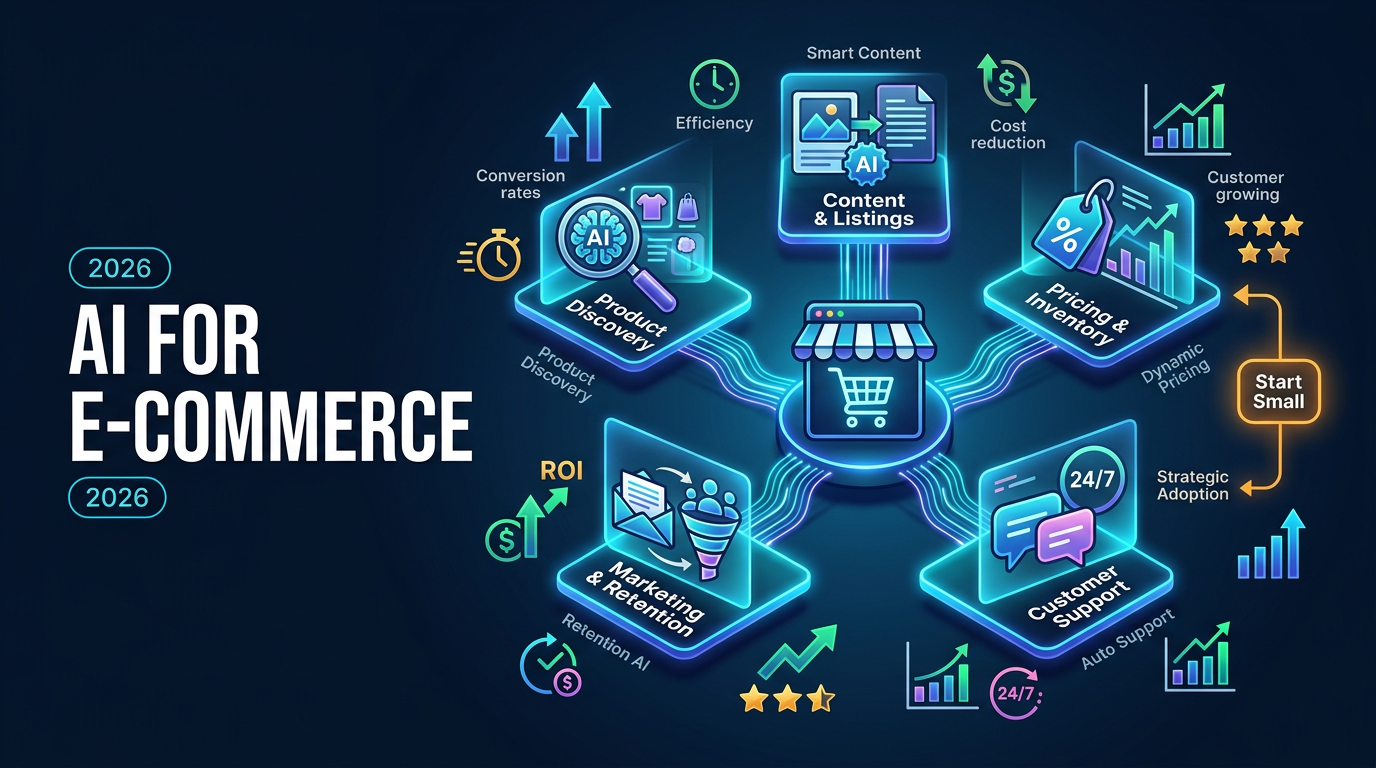
AI is everywhere in e-commerce marketing, which makes it hard to tell what genuinely moves the needle from what is just noise. This overview cuts through that. It maps the areas where AI delivers real value for an online store in 2026, from helping customers find products to running the back office, and gives you a sensible way to adopt it without chasing every shiny trend.
This is the foundation piece for our e-commerce series. Specific topics, like scaling on Amazon or product research, go deeper in their own articles, but this is where to build the big-picture view first.
Table of Contents
- Product discovery and personalization
- Content and product listings
- Pricing and inventory
- Customer support
- Marketing and retention
- How to start without overdoing it
- Conclusion
Product discovery and personalization
One of AI’s biggest impacts in e-commerce is helping the right customer find the right product. AI-driven recommendations, search that understands intent rather than just keywords, and increasingly AI shopping assistants that answer questions and guide choices all shorten the path from arrival to purchase. For a store, better discovery directly means better conversion.
This is also where shopping is heading more broadly: customers increasingly interact with AI assistants that recommend and even help complete purchases. Stores that make their products easy for these systems to understand and surface gain an edge.
Content and product listings
Producing product content at scale is a perennial e-commerce headache, and AI addresses it directly. AI can draft product descriptions, generate and enhance product imagery, and adapt content for different channels, turning a slow manual process into a fast, repeatable one. The catch is quality control: AI drafts are a starting point, not a finished product, and a human pass keeps them accurate and on-brand.
Done well, this lets even a small store maintain rich, consistent listings across a large catalog, which both customers and search systems reward.
Pricing and inventory
On the operations side, AI helps with demand forecasting, inventory planning, and pricing decisions. Predicting what will sell and when reduces both stockouts and overstock, two of the most expensive problems in retail. AI-assisted pricing can respond to demand and competition, though it should always operate within sensible limits and respect platform rules.
These are less visible than customer-facing features, but the savings from getting inventory and pricing right often dwarf the flashier wins.
Tip: Resist the urge to adopt AI everywhere at once. Pick the area where your store loses the most time or money today, content, support, inventory, and apply AI there first. One solved problem beats five half-finished experiments.
Customer support
Online stores field a high volume of repetitive questions: order status, returns, sizing, availability. AI-powered support handles these instantly, around the clock, and escalates the cases that need a human. This both improves the customer experience and frees staff for higher-value work. We cover this in depth in our piece on AI-powered customer service, and it is one of the most reliable starting points for any store.
Marketing and retention
AI strengthens marketing across the board: segmenting audiences in plain language, personalizing email and messaging, optimizing campaigns, and identifying customers at risk of churning. For retention specifically, AI is good at spotting patterns a human would miss, which customers are slipping away, and prompting timely action. Since keeping a customer is cheaper than winning a new one, this is often where AI pays back fastest.
How to start without overdoing it
The trap in e-commerce is treating AI as a checklist to complete rather than a tool to apply where it helps. The sensible path is to identify your biggest current bottleneck, choose one AI application that targets it, implement it properly with a human in the loop, and measure the result. Then move to the next.
This keeps spending disciplined, builds real competence, and avoids the common outcome of a store full of half-used AI features that impress in demos but change nothing.
Conclusion
AI genuinely transforms e-commerce in 2026, across discovery, content, operations, support, and marketing, but only when applied deliberately. The winners are not the stores that adopt the most AI, but the ones that apply it to the right problems and keep humans in control of quality and judgment.
If you want help figuring out where AI will move the needle for your store, and implementing it well, talk to us. We help e-commerce businesses adopt AI where it actually pays off.
Amazon Optimization with AI
Amazon SEO meets AI – Automate your optimization in 2026.
Related articles
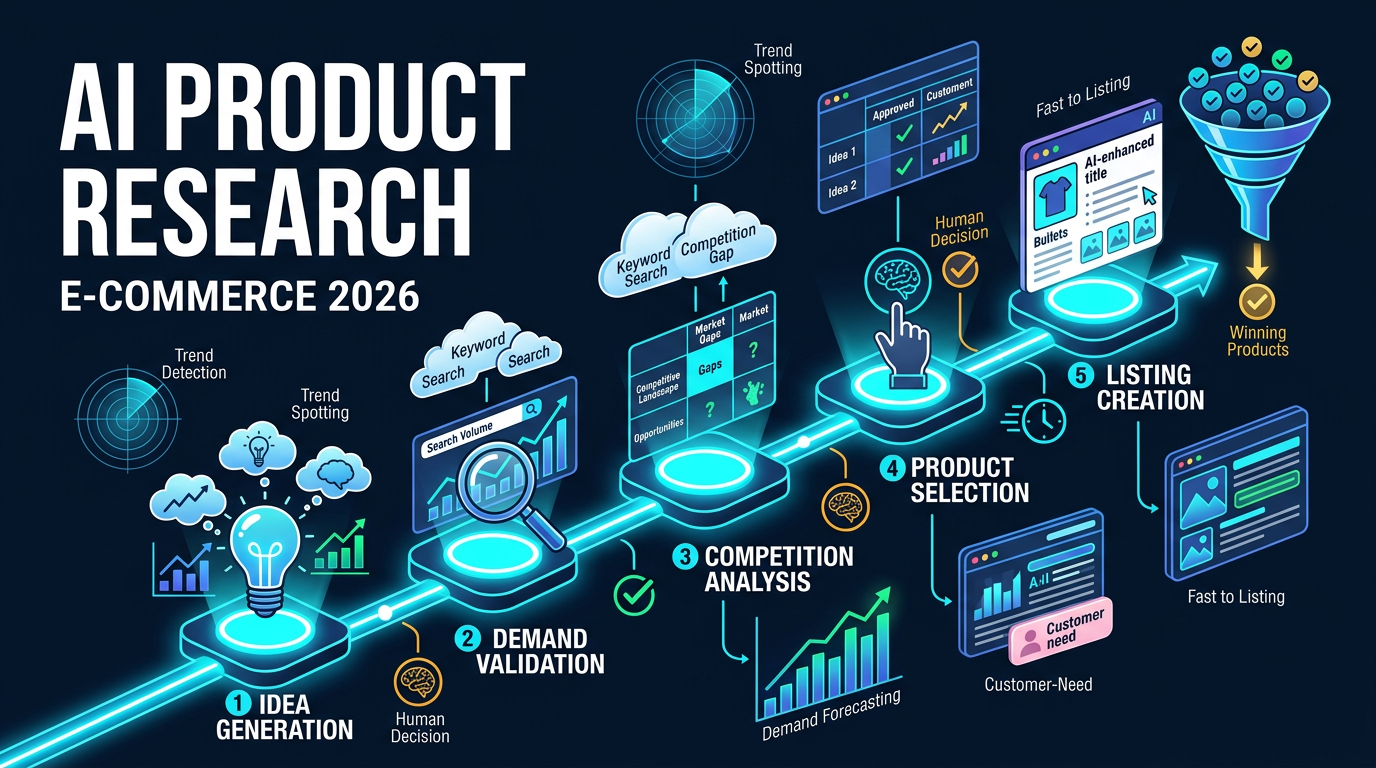
AI Product Research for E-Commerce in 2026: From Idea to Listing
AI product research for e-commerce in 2026: how to go from idea to validated product to ready listing faster, where AI genuinely helps, and where human judgment still wins.
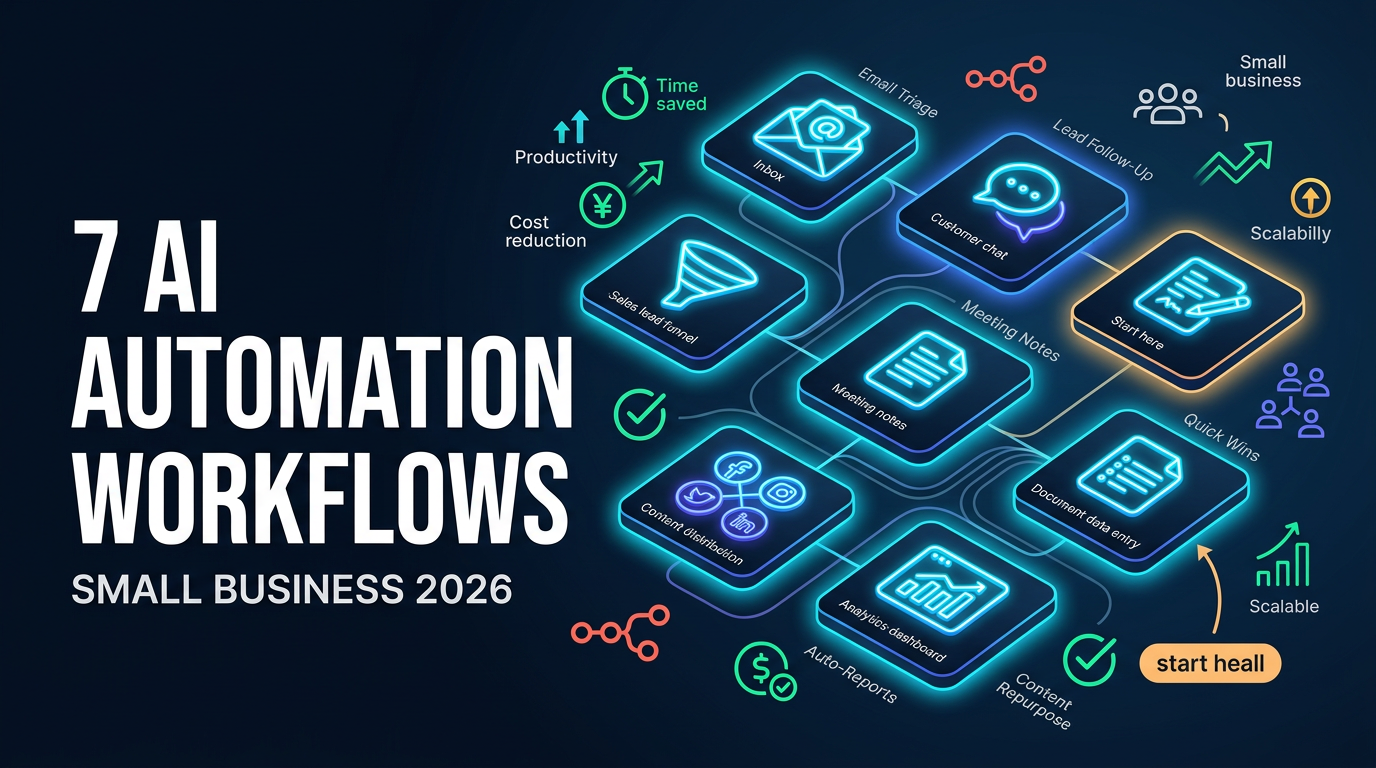
7 AI Automation Workflows Every Small Business Should Consider in 2026
Seven practical AI automation workflows every small business should consider in 2026, from inbox triage to lead follow-up, and how tools like n8n tie them together.
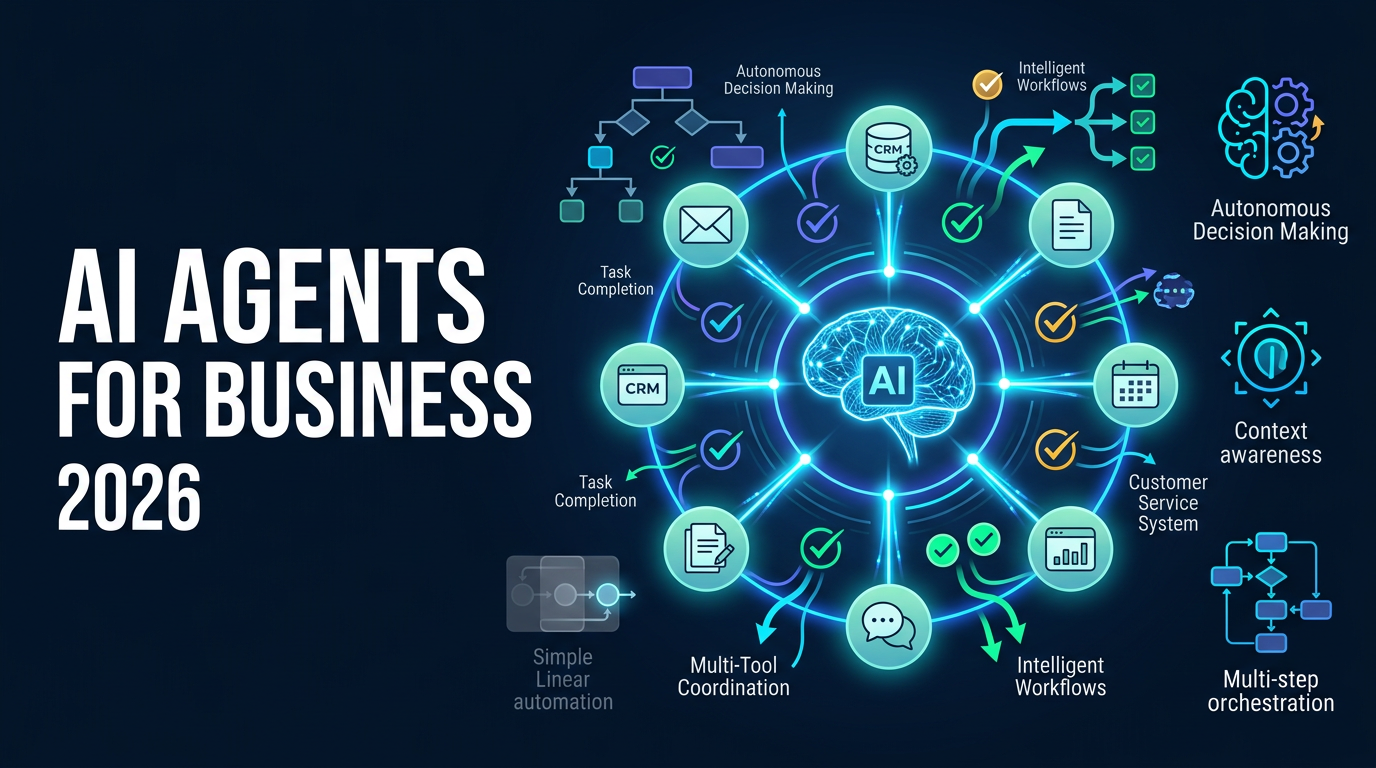
AI Agents for Business in 2026: What They Actually Do and Where to Start
AI agents for business in 2026: what they actually do, how they differ from ordinary automation, where to start, and how to avoid the common mistakes that waste money.