

AI Agents for Business in 2026: What They Actually Do and Where to Start
In short
AI agents for business in 2026: what they actually do, how they differ from ordinary automation, where to start, and how to avoid the common mistakes that waste money.
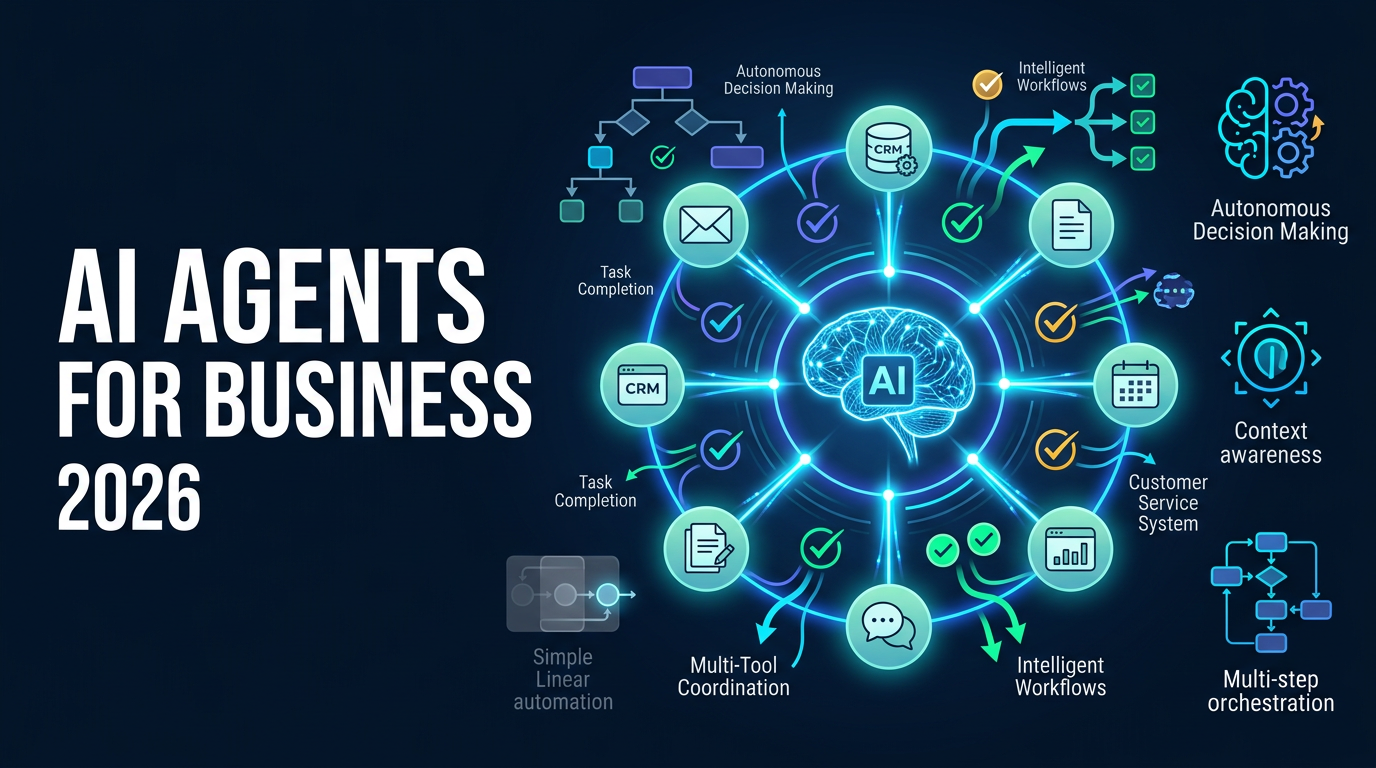
In 2026, “AI agent” is one of the most used and least understood terms in business technology. Vendors attach it to everything, and the result is a lot of confusion about what these systems really are, what they can do, and whether they are worth the investment. This guide cuts through that. It explains what AI agents actually are, how they differ from the automation you may already use, where they deliver real value, and how to start without wasting money.
This is the foundation piece for our series on AI agents and automation. Later articles go deeper into specific workflows and use cases, but this is the place to build a clear mental model first.
Table of Contents
- What an AI agent actually is
- Agents vs. ordinary automation
- What AI agents are good at
- Realistic use cases for businesses
- Where to start without wasting money
- Common mistakes
- Conclusion
What an AI agent actually is
An AI agent is software that can look at a situation, decide what needs to happen, and take action to achieve a goal, with little or no step-by-step human direction. The key word is decide. Where older software follows fixed instructions, an agent reasons about a goal and chooses how to reach it.
A simple example makes the difference clear. A traditional script might say “when an email arrives, save the attachment to this folder.” An agent can be told “handle incoming customer inquiries,” and then read the message, decide whether it is a question, a complaint, or an order, look up the relevant information, and respond or escalate accordingly. The script follows a rule. The agent pursues a goal.
Agents vs. ordinary automation
This distinction matters because the two solve different problems, and confusing them leads to bad decisions. Traditional automation is excellent for repetitive, predictable tasks with structured data: moving files, syncing records, sending scheduled messages. It is reliable, cheap, and you should absolutely use it where it fits.
AI agents shine in dynamic situations that require judgment: interpreting messy input, making context-dependent decisions, handling cases that do not fit a fixed rule. They are more powerful but also more complex and less predictable. The smartest setups in 2026 combine both, using simple automation for the routine plumbing and agents for the parts that genuinely need reasoning.
The mistake is reaching for an AI agent when a simple automation would do, or expecting rule-based automation to handle something that really needs judgment.
What AI agents are good at
In practical terms, agents excel wherever a task involves understanding unstructured information and deciding what to do with it. That includes reading and triaging messages, pulling together information from several sources to answer a question, drafting responses that fit context, and coordinating multi-step processes that branch depending on what they find.
What they are not is infallible. An agent can misjudge, especially in edge cases, which is why the well-designed ones operate within clear boundaries and escalate to a human when they are unsure. The goal is not to remove humans but to handle the high-volume, judgment-light work so people can focus on what needs them.
Tip: A good rule of thumb: if a task is fully predictable, automate it the simple way. If it requires reading, interpreting, or deciding, that is where an AI agent earns its place. Match the tool to the problem.
Realistic use cases for businesses
The most proven use cases in 2026 cluster around a few areas. Customer service is the clearest: an agent that handles common inquiries, drafts responses, and escalates the tricky ones. Sales and CRM work well too, with agents updating records, summarizing calls, and flagging follow-ups. Internal operations benefit from agents that pull reports together, monitor for anomalies, and route information to the right people.
For a small or mid-sized business, the highest-value starting points are usually the repetitive, high-volume tasks that currently eat staff time but do not need deep expertise. That is where an agent frees up the most hours for the least risk.
Where to start without wasting money
The biggest waste comes from starting too big. The sensible path is to pick one well-defined, high-volume process, something painful and repetitive, and pilot an agent there. Keep the scope narrow, set clear boundaries, and include a human checkpoint for anything the agent is unsure about.
Measure the result against a simple baseline: hours saved, errors reduced, response time improved. If the pilot proves out, expand from there. This keeps risk low, builds internal confidence, and avoids the expensive trap of trying to automate everything at once before anyone understands what works.
Common mistakes
A few recurring ones are worth naming. Over-engineering, using an agent where simple automation would be cheaper and more reliable. Starting too broad, trying to transform everything instead of proving one use case. Removing the human entirely, when a review step would have caught costly errors. And choosing tools before defining the problem, which leads to impressive demos that solve nothing real.
Avoiding these comes down to one discipline: define the problem first, then choose the smallest solution that solves it well.
Conclusion
AI agents in 2026 are genuinely powerful, but only when matched to the right problems. They differ from ordinary automation by making decisions rather than following scripts, and they earn their keep in dynamic, judgment-heavy work. The path to value is unglamorous but reliable: start small, pick one painful process, keep a human in the loop, and expand once it works.
If you want help identifying where AI agents will actually pay off in your business, and building them properly, talk to us. We help companies cut through the hype and deploy AI agents and automation that deliver measurable results.
Related articles
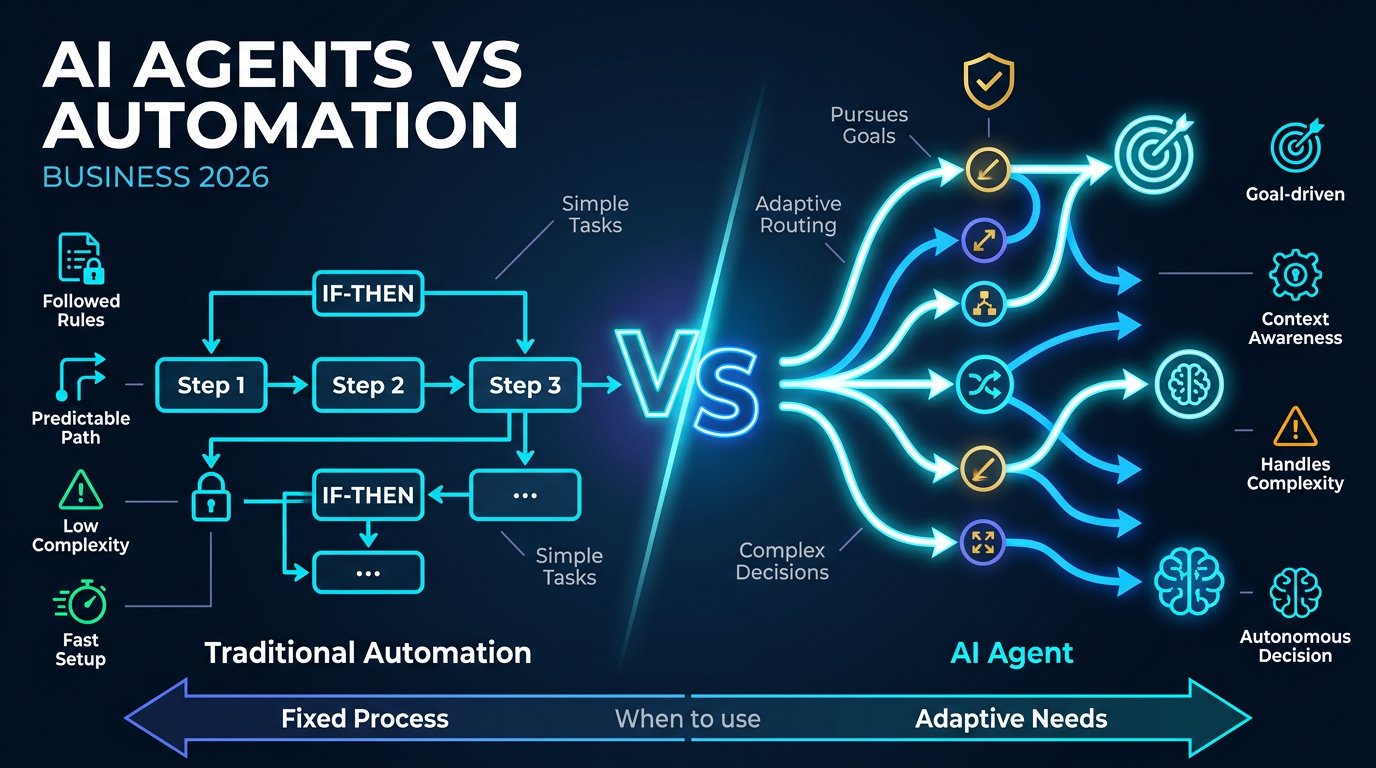
AI Agents vs. Automation in 2026: Which One Does Your Business Actually Need?
AI agents vs. automation in 2026: the real difference, when each one is the right choice, and how to avoid paying for an AI agent when simple automation would do the job.
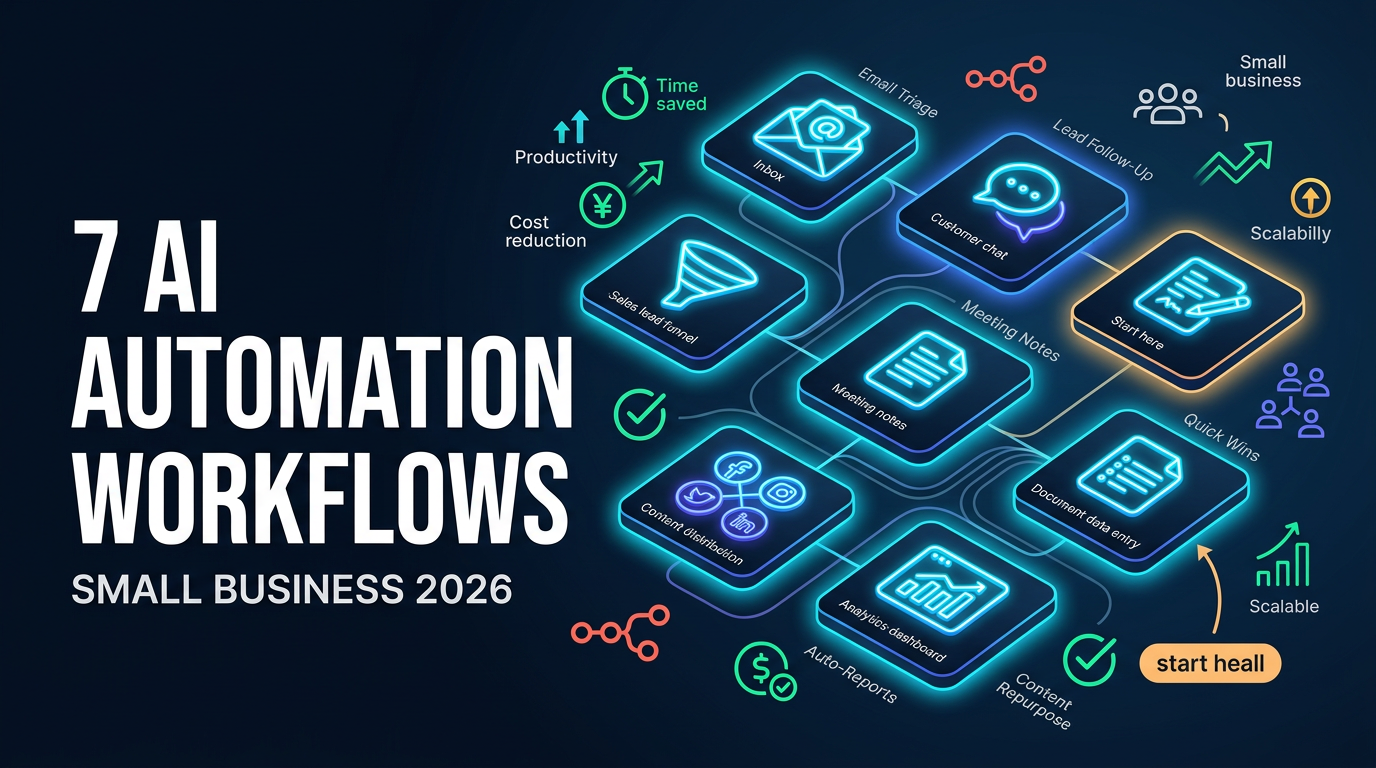
7 AI Automation Workflows Every Small Business Should Consider in 2026
Seven practical AI automation workflows every small business should consider in 2026, from inbox triage to lead follow-up, and how tools like n8n tie them together.
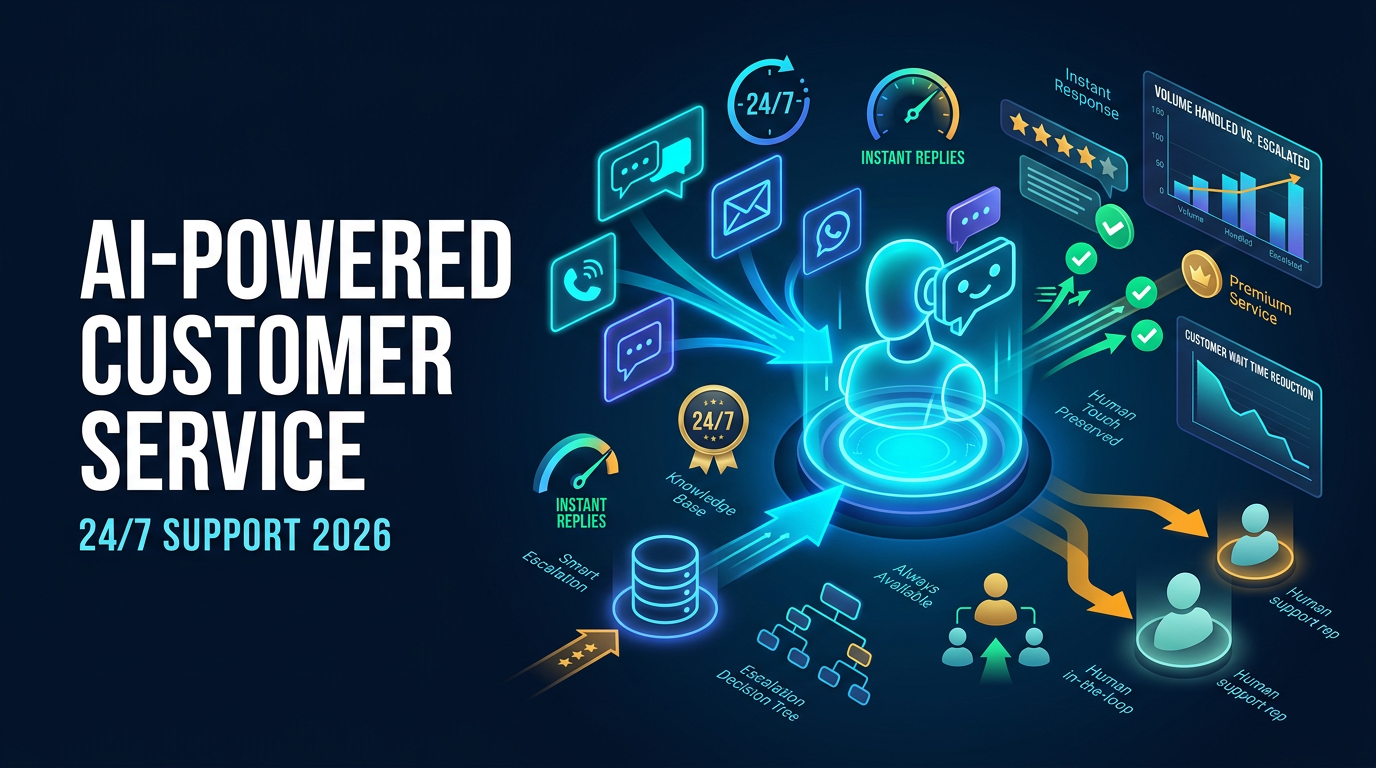
Building AI-Powered Customer Service That Works Around the Clock in 2026
Building an AI-powered customer service that works around the clock in 2026: what it can handle, what it should escalate, and how to deploy it without losing the human touch.