

AI Agents vs. Automation in 2026: Which One Does Your Business Actually Need?
In short
AI agents vs. automation in 2026: the real difference, when each one is the right choice, and how to avoid paying for an AI agent when simple automation would do the job.
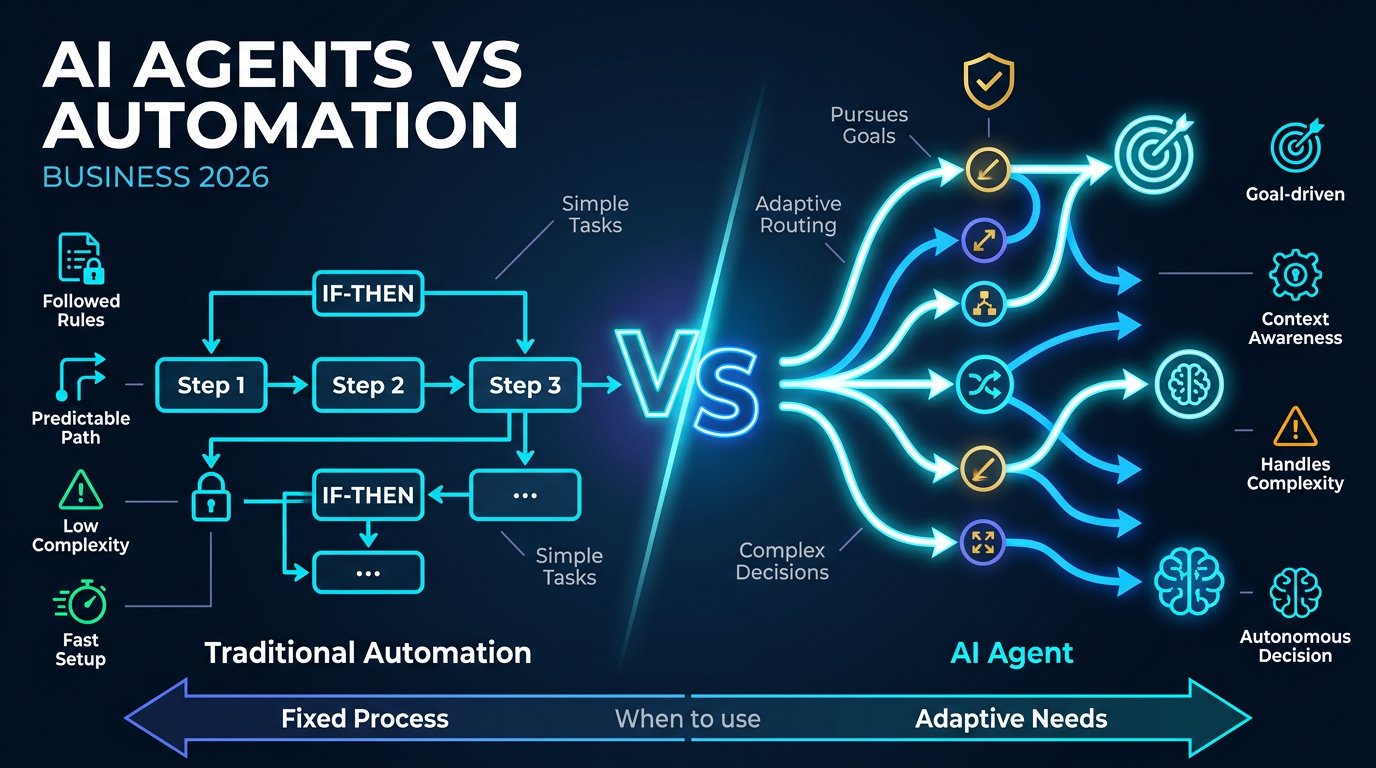
The terms get used interchangeably, but AI agents and traditional automation are not the same thing, and choosing the wrong one wastes money in both directions. Use simple automation where you needed an agent, and it breaks on the first unexpected case. Use an expensive AI agent where simple automation would do, and you have overbuilt a problem that did not need it. This article makes the distinction clear and practical.
If you want the broader picture, our guide to AI agents for business sets the context. This piece zeroes in on the choice between the two.
Table of Contents
- The core difference in one sentence
- How traditional automation thinks
- How an AI agent thinks
- A side-by-side example
- How to choose
- Why most businesses need both
- Conclusion
The core difference in one sentence
Automation follows rules. An agent pursues goals. That is the whole distinction, and everything else follows from it. Automation does exactly what you told it, step by step. An agent is given an objective and figures out the steps itself, adapting to what it encounters.
Both are useful. They are simply suited to different kinds of work.
How traditional automation thinks
Traditional automation is a set of if-this-then-that rules. When a specific trigger happens, it performs a specific, predefined action. It does not interpret, it does not decide, it executes. This makes it fast, cheap, predictable, and extremely reliable for the right tasks.
The catch is rigidity. Automation only handles the cases you anticipated. The moment something unexpected arrives, input it was not built for, an edge case, an ambiguous situation, it either does the wrong thing or stops. For predictable, structured tasks, that rigidity is fine. For messy, variable ones, it is a wall.
How an AI agent thinks
An AI agent is given a goal rather than a script. It can interpret unstructured or unexpected input, reason about what to do, and choose an appropriate action, even in situations no one explicitly programmed. That flexibility is its strength.
The trade-off is that agents are more complex, more expensive, and less perfectly predictable than a fixed rule. They can occasionally misjudge, which is why good agent setups operate within clear boundaries and escalate when unsure. You gain adaptability, you give up some of the absolute certainty that simple automation provides.
Tip: Ask one diagnostic question about any task: “Could I write down every possible case and exactly what to do in each?” If yes, automate it simply. If the cases are too many, too varied, or too unpredictable to list, that is where an agent fits.
A side-by-side example
Take incoming customer emails. A traditional automation can route messages based on fixed rules: if the subject contains “invoice,” send it to billing. That works until an email about a billing problem does not contain the word “invoice,” at which point the rule fails.
An AI agent reads the actual content, understands that the customer has a billing issue regardless of the exact words, and routes accordingly. It even drafts a relevant response. Same task, but the agent handles the variability that breaks the rule-based version. That is the difference in practice.
How to choose
Match the tool to the nature of the task, not to the hype. Choose simple automation when the task is repetitive, the inputs are structured, and the rules are clear and stable. Choose an AI agent when the task requires interpreting messy input, making context-dependent decisions, or handling cases you cannot fully predict.
And be honest about cost. Automation is cheaper to build and run. Reach for an agent when the flexibility genuinely earns its higher cost, not because it sounds more advanced.
Why most businesses need both
In practice, the strongest setups are hybrids. Simple automation handles the predictable plumbing: moving data, syncing systems, sending scheduled messages. Agents handle the parts that need judgment. The automation provides reliable structure, and the agent provides adaptability where it counts.
Thinking of it as agents versus automation is the wrong frame. The real question is which parts of a process are predictable and which need reasoning, and then using the right tool for each part.
Conclusion
AI agents and automation are not competitors. They are different tools for different jobs. Automation follows rules and excels at the predictable. Agents pursue goals and excel at the variable. Choose by the nature of the task, combine them where it makes sense, and you avoid both overspending and brittleness.
If you want help deciding where each fits in your business, and building the right mix, talk to us. We help companies apply automation and AI agents exactly where each delivers the most value.
Related articles
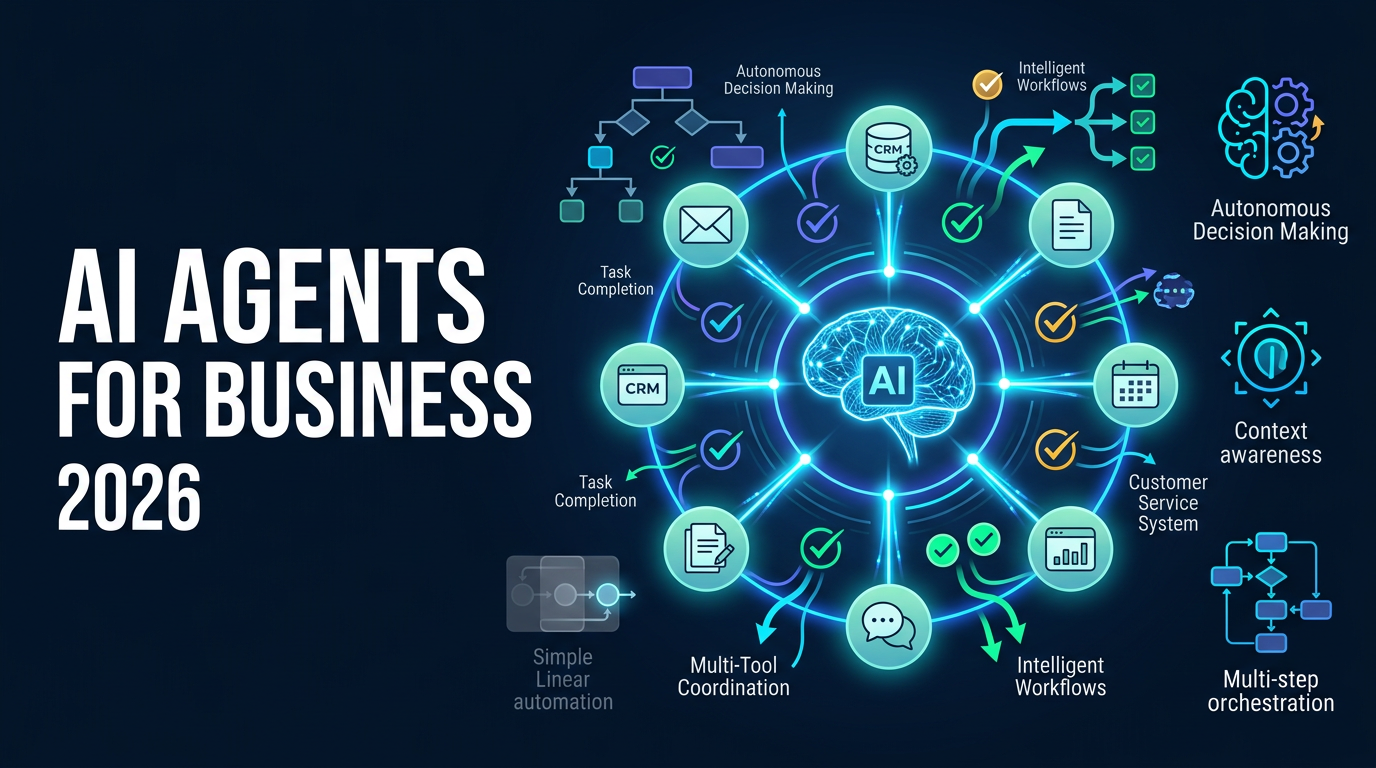
AI Agents for Business in 2026: What They Actually Do and Where to Start
AI agents for business in 2026: what they actually do, how they differ from ordinary automation, where to start, and how to avoid the common mistakes that waste money.
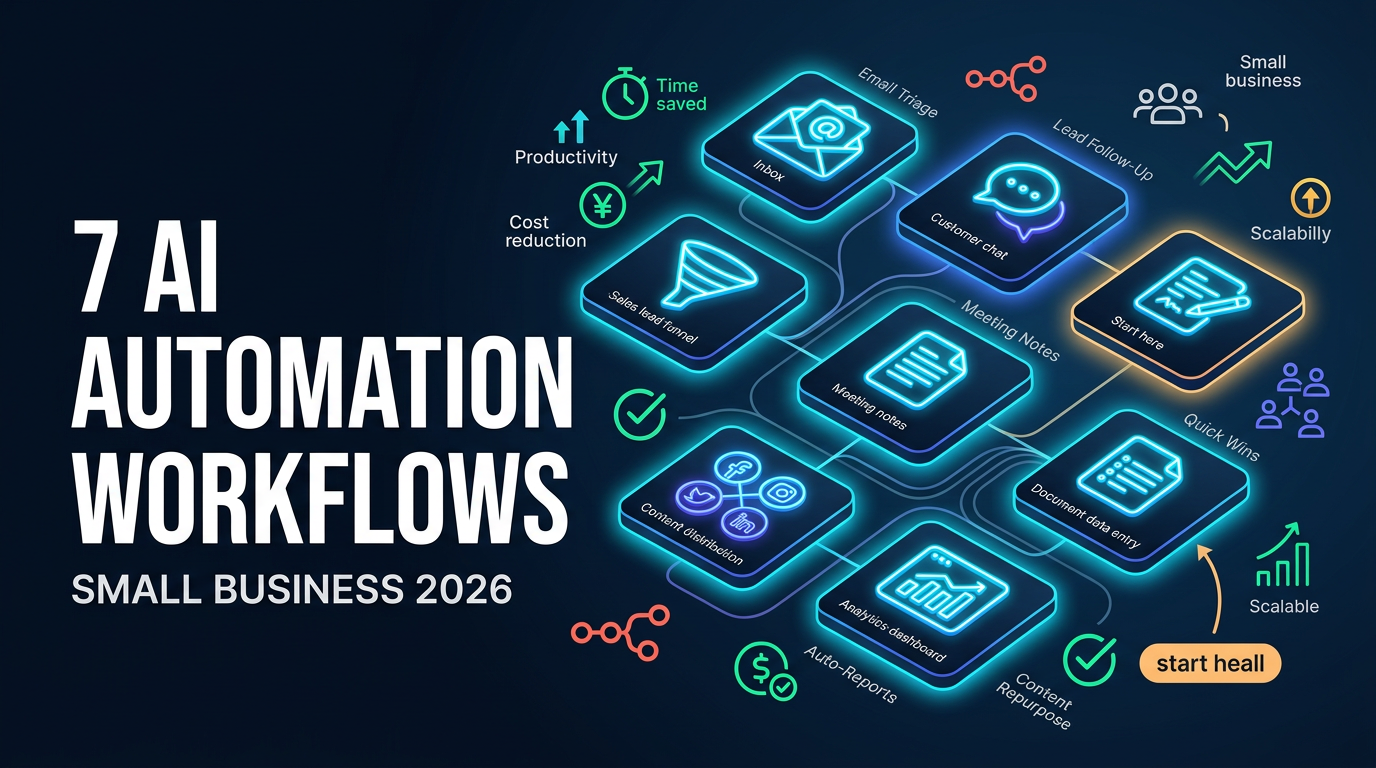
7 AI Automation Workflows Every Small Business Should Consider in 2026
Seven practical AI automation workflows every small business should consider in 2026, from inbox triage to lead follow-up, and how tools like n8n tie them together.
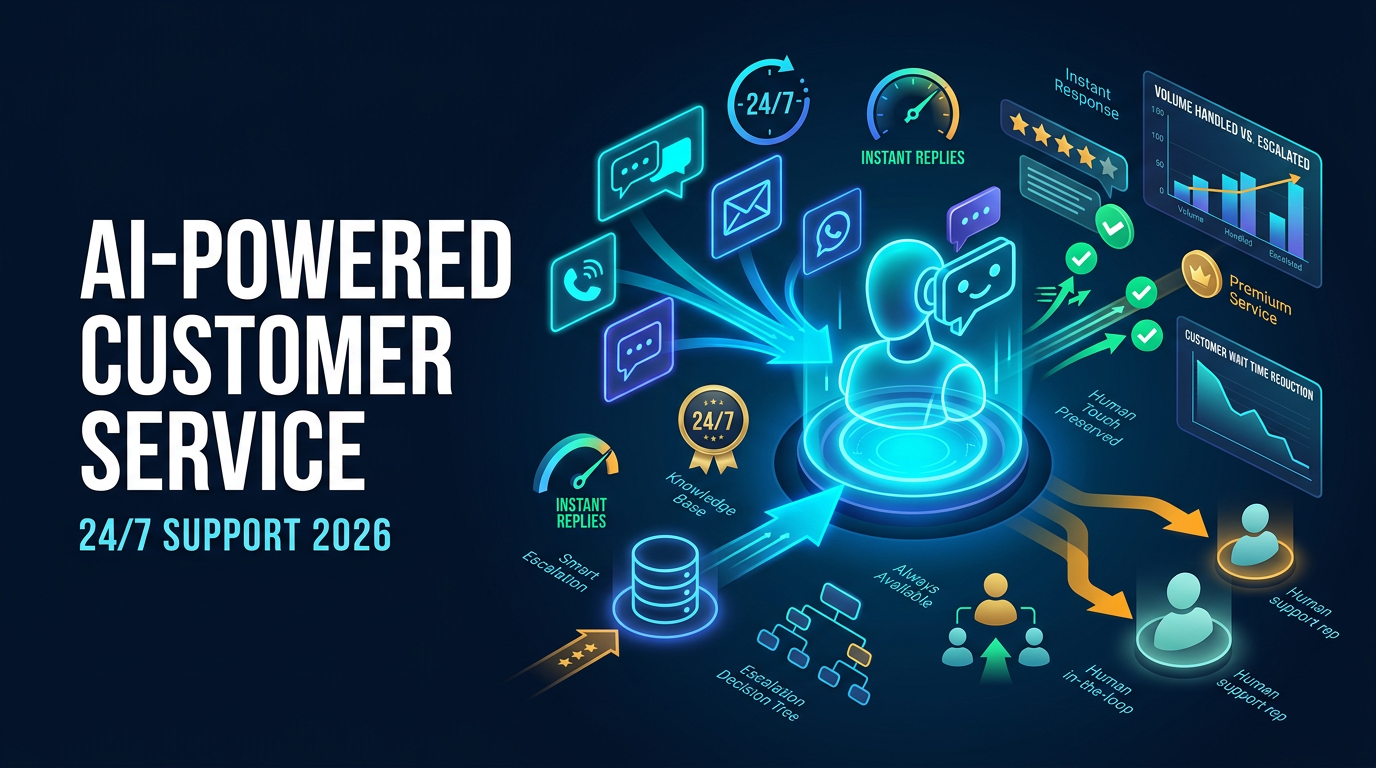
Building AI-Powered Customer Service That Works Around the Clock in 2026
Building an AI-powered customer service that works around the clock in 2026: what it can handle, what it should escalate, and how to deploy it without losing the human touch.