

5 Steps To Perfect Amazon Listing Optimization

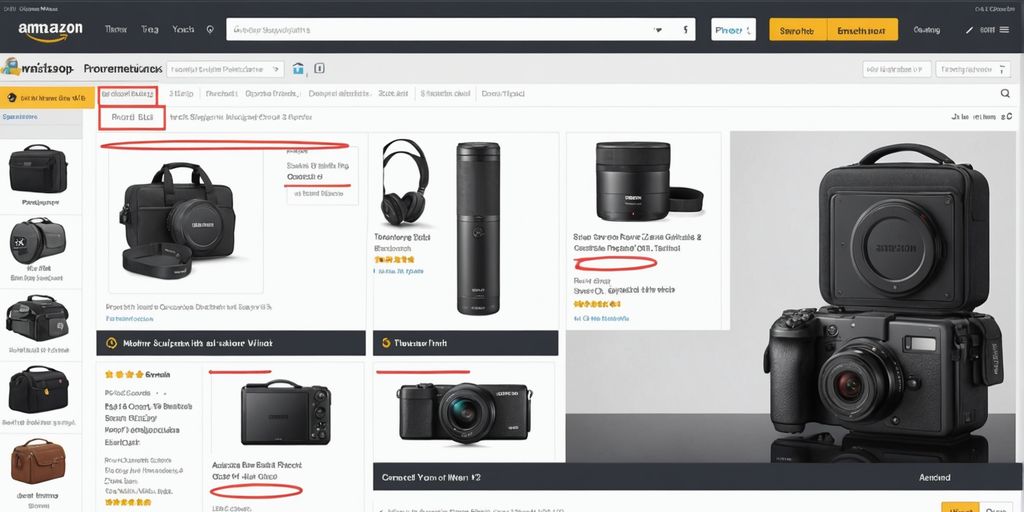 An effective Amazon listing is the key to high sales numbers. In this article, we will show you how to optimize your Amazon listing in five simple steps to reach more customers and increase your conversion rate. Whether you are new to selling on Amazon or want to improve your existing listings, these tips will help you present your product in the best light.
Key Insights
- An optimized product title is crucial for the visibility of your product.
- High-quality product photos are the first impression and can greatly influence the purchasing decision.
- Bullet points should clearly and concisely present the main benefits of your product.
- The product description provides space for detailed information and can further pique customers’ interest.
- Backend keywords are invisible to customers but essential for your product’s discoverability in Amazon search.
1. Product Title
A clear and compelling product title is crucial for the success of your Amazon listing. Avoid confusing words to not deter potential buyers. If your product is a multipack, make this clear, including quantity and size.
Best Practices
There are some best practices to consider when creating your product title:
- Capitalize all words except for articles, conjunctions, and prepositions.
- Use numerals instead of written-out numbers (e.g., “2” instead of “two”).
- Avoid subjective terms like “bestseller” or “great product” as well as discount terms like “sale”.
- Separate keywords and specific points with pipes (|) or dashes (-) to make long titles more readable.
Invest Time
Take the time to find the perfect title. A good product title can sell your product for years. Remember that a keyword only needs to be used once throughout the entry for it to be considered by the algorithm.
A well-formulated title increases the click-through rate and thus the ranking of your product.
Elements of an Ideal Product Title
Your title should include the following elements:
- Brand
- Product line
- Material or main feature
- Product type
- Color
- Size
- Packaging/Quantity
A proven formula for the perfect Amazon title is: Brand + Model + Product Type + Material, Purpose / Size / Quantity / Color.
E-Commerce Tip
Place the most important keywords first. The order and choice of keywords in your title can significantly influence the sales and ranking of your Amazon product. Use tools like the [Helium 10 discount] to optimize your titles.
2. Product Photos
Professional product photos are crucial for the success of your Amazon listing. They only need to be created once, but they can generate sales for years and more than make up for the photography costs.
Follow Amazon Guidelines
Ensure that all images meet Amazon’s requirements. The main image should clearly show the product on a white background. All images should be clear and informative and accurately represent the product.
Image Size and Quality
The images should be at least 1,000 pixels wide and 500 pixels high. For optimal display, a size of 1,600 pixels is recommended. This ensures that the zoom function works optimally and customers can see details.
Number of Images
Use the maximum number of images allowed by Amazon. Currently, up to seven images can be used. Show the product from different angles and in different contexts to provide customers with a comprehensive view.
Lifestyle Images
Try to include at least one lifestyle image that shows your product in action. This helps potential customers envision how they might use your product.
Infographics
Use infographics to visually present important product information. This can facilitate the purchasing decision.
Tip: Test the order of your images and analyze the sales data. A specific order can lead to a higher conversion rate.
For more tips and tools to optimize your Amazon listing, such as Sellerboard 2 months free, visit our website.
3. Bullet Points
Bullet points are an essential part of a successful Amazon listing. They provide the opportunity to present the most important product features and benefits in a compact and clear manner. A good structure and precise wording are crucial here.
Important Aspects of Bullet Points
- Insert relevant keywords: The bullet points are a significant factor for Amazon ranking. Therefore, important keywords should definitely be integrated.
- Compact information: Each bullet point should contain the essential information that is of interest to the customer, such as size, quality, materials, and colors.
- Consistent length: Ensure that the bullet points are approximately the same length to create a harmonious overall appearance.
- Highlight customer benefits: Focus on clearly presenting the benefits of your product. Ask yourself: What problem does your product solve for the customer?
- Avoid empty phrases: Phrases like “high quality” should be avoided. Instead, show specifically why your product is of high quality.
Technical Details
- Character limit: Amazon allows up to 1,000 characters for all five bullet points combined. Use this space efficiently, but do not overload the bullet points.
- Placement: On desktop devices, the bullet points appear directly under the product title, while on mobile devices, they can be found under the product description or A+ content.
- Formatting: According to Amazon Style Guides, emojis, capital letters, or bold letters are not allowed in the bullet points. However, their use can increase the conversion rate and click-through rate.
The bullet points are important not only for the algorithm but also for the customer. A clear and appealing presentation can significantly influence the purchasing decision.
Practical Tips
- Capitalize the first word: Start each bullet point with a capitalized word to grab customers’ attention.
- Icons and emojis: If it fits your product, you can use icons or emojis at the beginning of each bullet point.
- Repeat keywords: Repeat the main keyword from your product title and use other high-search-volume terms.
- Avoid keyword stuffing: Do not overload the bullet points with keywords. Readability and comprehensibility should be the priority.
By following these points, you can significantly increase the visibility and attractiveness of your Amazon listing.
4. Product Description
The product description is an essential part of your Amazon listing. Although it is weighted less heavily by Amazon, it still offers an excellent opportunity to present complex products in detail. Here you can use up to 2,000 characters to comprehensively describe your product.
Important Aspects of the Product Description
- Clear structure: Structure the information logically and in a meaningful order.
- Emphasize benefits: Highlight the benefits of the product for the buyer instead of just listing the features.
- Incorporate keywords: Integrate relevant keywords, but pay attention to naturalness and readability.
- Simple language: Avoid complicated jargon unless your target audience expects it.
- Create emotional connection: Try to establish an emotional connection with your customers by addressing their problems and needs.
- Visual presentation: Use bullet points or other visual aids to improve readability.
The product description is the ideal place to use long-tail keywords that are particularly relevant for search engines like Google. This can increase the visibility of your product outside of Amazon.
Optimization Tips
- Utilize space: Use all available space to include as much relevant information as possible.
- Use A+ content: If you use A+ content, the standard product description will be hidden but still indexed. This provides the opportunity to include additional keywords.
- Analyze competitors: Look at the product descriptions of your competitors for inspiration and ideas.
A well-structured and informative product description can make the difference between an average and a successful Amazon listing. Use this opportunity to present your product in the best possible way.
5. Backend Keywords
Backend keywords are an essential part of Amazon listing optimization. These keywords are not visible to customers but play a crucial role in your product’s ranking.
Important Notes
- Capitalization and umlauts are irrelevant.
- Filler words like “for” and “with” should be avoided.
- The order of the keywords is not important.
- Typos and alternative spellings can be considered.
- Protected brand terms may not be used.
Amazon Platinum Keywords
These keywords are only relevant for so-called Platinum Sellers. If you are not a Platinum Seller, you can ignore these fields.
Optimal Use
- Use up to 250 bytes for backend keywords.
- Separate the keywords with spaces.
- Use synonyms and abbreviations.
- Avoid spelling mistakes.
Thorough keyword research is the foundation for successful Amazon listing optimization. Tools like Cerebro Pro can help identify the most relevant keywords.
Backend keywords provide an additional way to increase the visibility of your product without resorting to keyword stuffing.
Conclusion
Optimizing an Amazon listing is a crucial step in maximizing the success of your product on the platform. By carefully following the five described steps—from keyword research to optimizing the product title and description to high-quality images and backend keywords—you can ensure that your product is not only visible but also convinces potential buyers. Remember that continuous testing and adjusting are necessary to achieve the best results. With a perfectly optimized listing, you lay the foundation for higher sales numbers and long-term success on Amazon.
Frequently Asked Questions
What is an Amazon listing?
An Amazon listing is the product page that contains all important information about a product, such as title, description, images, and reviews.
Why is the product title so important?
The product title is crucial because it is the first thing customers see. A good title helps make the product visible in search results.
What role do product photos play?
Product photos are very important as they are often the first thing customers see. Good photos can spark interest and motivate purchases.
What are bullet points and why are they important?
Bullet points are short, concise lists of product features and benefits. They help customers quickly grasp the most important information.
How can I optimize my product description?
A good product description should be clear and informative. It should highlight the main benefits and features of the product and include relevant keywords.
What are backend keywords?
Backend keywords are search terms entered in the backend of the Amazon listing. They are not visible to customers but help improve the product’s placement in search results.
How do I find the right keywords for my listing?
You can find the right keywords through keyword research. Tools like Helium10 or Amazon’s autocomplete function can help with this.
Why is optimizing the listing important?
Good optimization of the listing increases the visibility and attractiveness of the product, which can lead to more sales.
Ähnliche Beiträge

1password Secrets Automation Manage Passwords in One Place
Many tools, many passwords - in the modern working world, people are faced with the challenge of optimally protecting their accounts, both privately and in business. More and more people are therefore turning to password managers. 1Password is just such a password manager. The provider ensures that you have secure passwords without losing track of them. There are also offers for private individuals and for business customers. In this article, we would like to take a closer look at how the automatic storage of passwords in the 1Password Secrets tool works. Of course, we will also take a look at the associated prices. You can also find more information about 1Password in this article.
Amazon Accelerate Tracee Ellis Ross Announced As Guest Speaker

Amazon Fake Reviews Legal Action Against Scammer Groups
To combat fake reviews, Amazon recently took legal action against a number of groups on the social media platform Facebook. This is of course good news for Amazon sellers. In this article, we would like to briefly and concisely inform you once again about how the scammers proceed and what exactly Amazon is doing about it. In addition, we will introduce you to a tool that you can use to protect yourself against fake products on Amazon.