

AI Influencer Disclosure and Transparency: What Brands Should Know in 2026
In short
AI influencer disclosure and transparency in 2026: the two things brands must get right, advertising labeling and AI transparency, explained on a practical, principle level.
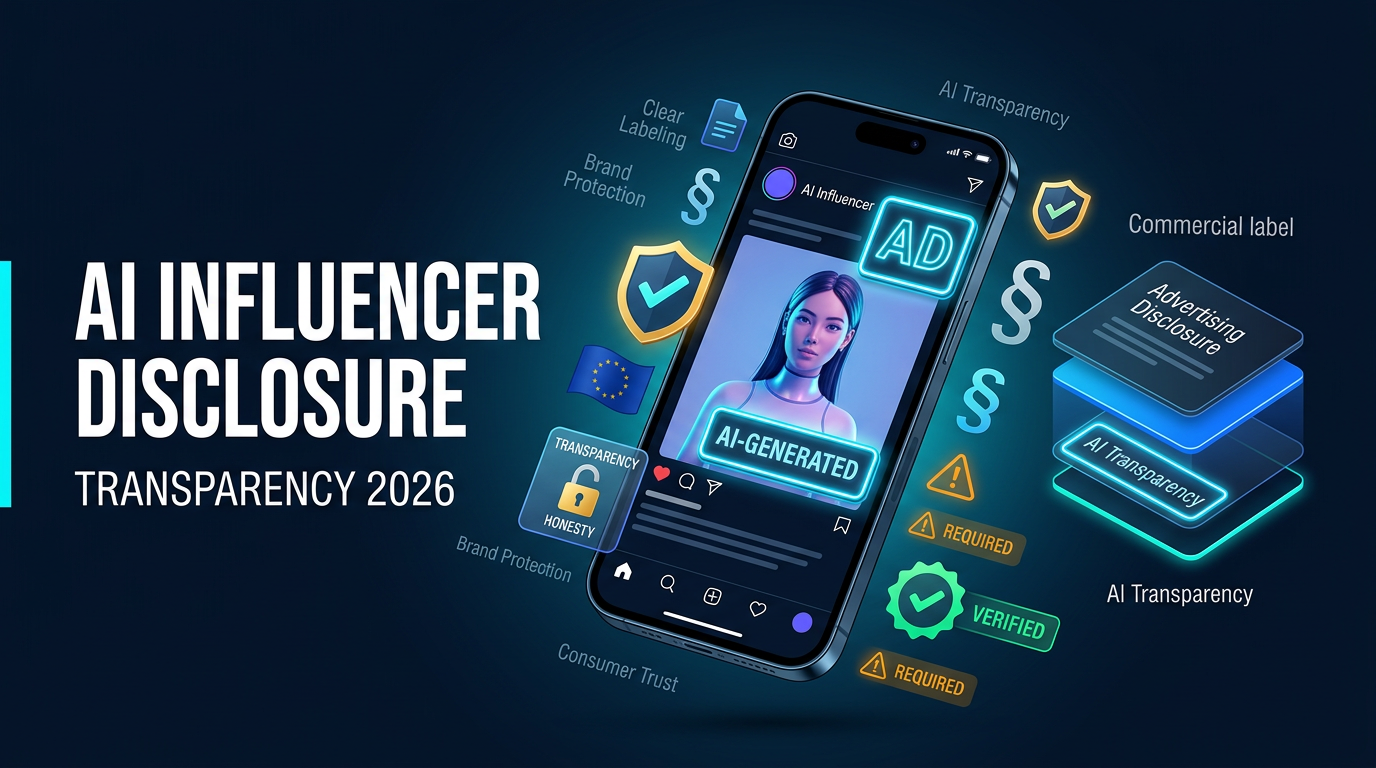
An AI influencer is not a legal gray zone, and treating it like one is a fast way to damage a brand. In 2026 there are two distinct things brands need to get right: disclosing when content is advertising, and being transparent that the persona is AI-generated. They are easy to confuse and equally easy to neglect. This article explains both on a practical level.
Important note up front: this is general guidance, not legal advice. Rules differ by country, so for your specific situation and markets, consult a qualified professional. If you are building a persona, pair this with our guide on how to create an AI influencer for your business.
Table of Contents
- Two different things people confuse
- Advertising disclosure
- AI transparency
- Why transparency helps the brand
- A practical checklist
- Conclusion
Two different things people confuse
The first thing to understand is that disclosure and transparency are not the same. Advertising disclosure tells the audience that a piece of content is commercial, that there is a promotional purpose behind it. AI transparency tells the audience that the persona or content is artificially generated rather than a real human.
A sponsored post by a photorealistic AI influencer may need both: a label that it is advertising, and a signal that the creator is AI. Treating these as one thing, or assuming one covers the other, is a common and avoidable mistake.
Advertising disclosure
The principle here is consistent across most markets: if content promotes a product and there is a commercial relationship behind it, that has to be clear to the audience. This applies to a virtual influencer exactly as it applies to a human one. The fact that the creator is artificial does not remove the obligation, because what matters is the commercial nature of the message, not the nature of the messenger.
In practice, that means a clear, visible label, placed where the audience actually sees it, not buried among hashtags. The exact wording and rules vary by country, but the safe approach everywhere is unambiguous, up-front labeling of commercial content.
AI transparency
This is the layer that is newer and rising fast. Around the world, regulators are moving toward requiring that artificially generated content, especially content that looks convincingly real, be identifiable as such. The underlying logic is simple: people have a right to know whether they are interacting with a real human or an AI.
For a photorealistic AI influencer, this is directly relevant. The direction of travel internationally is clearly toward more transparency, not less, so building it in from the start is both the responsible choice and the future-proof one.
Tip: Make the AI nature of your persona clear from the beginning, for example in the profile bio and, where appropriate, on individual posts. It builds trust, preempts accusations of deception, and aligns with where regulation is heading globally.
Why transparency helps the brand
It is tempting to see disclosure as a burden, something that weakens the illusion. In practice, transparency is a brand asset. Audiences increasingly value honesty, and a brand caught hiding that its ambassador is AI risks a backlash far worse than any loss from disclosing it openly.
Being upfront also positions the brand as confident and modern rather than deceptive. The most successful virtual influencers are often openly AI, and their audiences engage with them anyway. Honesty and effectiveness are not in conflict here.
A practical checklist
A few principles that hold up across markets. Label commercial content clearly and visibly, at the start, not hidden in hashtags. Make the persona’s AI nature transparent, especially if it is photorealistic. Avoid making the persona too similar to a real, identifiable person, which can create separate legal problems. Keep claims about products truthful, since the brand is fully responsible for everything the persona says. And put a human review step before publication, because accountability always sits with the operator, never the avatar.
Conclusion
In 2026, running an AI influencer responsibly comes down to two clear layers: disclose when content is advertising, and be transparent that the persona is AI. Both are straightforward once separated, and both protect the brand far more than they constrain it.
The brands that handle this well build trust rather than risk, and trust is the entire value of an influencer, real or virtual. For specifics in your markets, work with a qualified professional, and if you want a persona built with a brand-safe review process from day one, talk to us.
This article is general information and does not constitute legal advice. Rules vary by jurisdiction. For binding guidance on your specific situation, consult a qualified professional.
Related articles
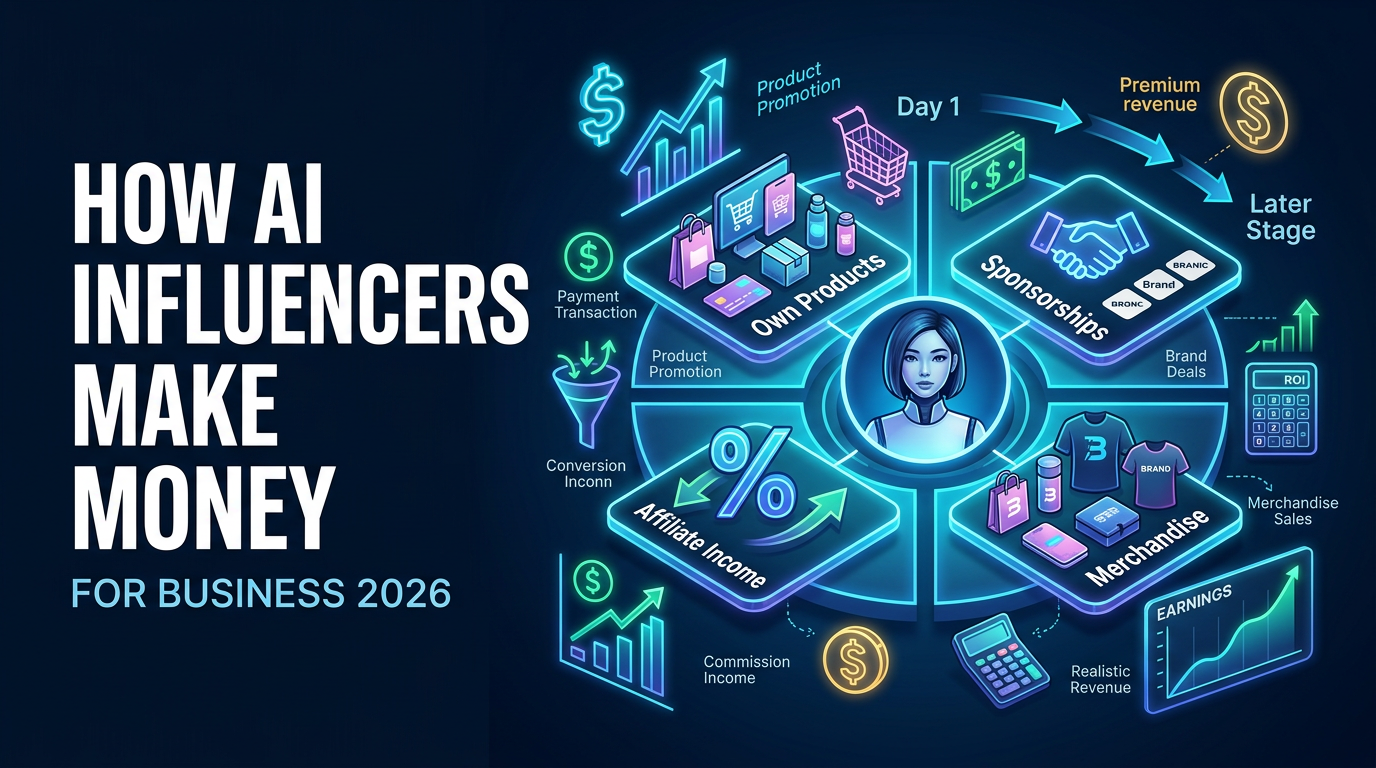
How AI Influencers Make Money for a Business in 2026
How AI influencers make money for a business in 2026: the real revenue streams, from promoting your own products to sponsorships and affiliate income, with honest expectations.

How to Create an AI Influencer for Your Business in 2026
How to create an AI influencer for your business in 2026: a practical guide for brands covering strategy, consistency, cost, monetization, and where the real work lies.

What Does an AI Influencer Cost in 2026? A Realistic Breakdown for Brands
What does an AI influencer cost in 2026? A realistic breakdown for brands, from DIY tooling to a fully managed virtual ambassador, and where the money actually goes.